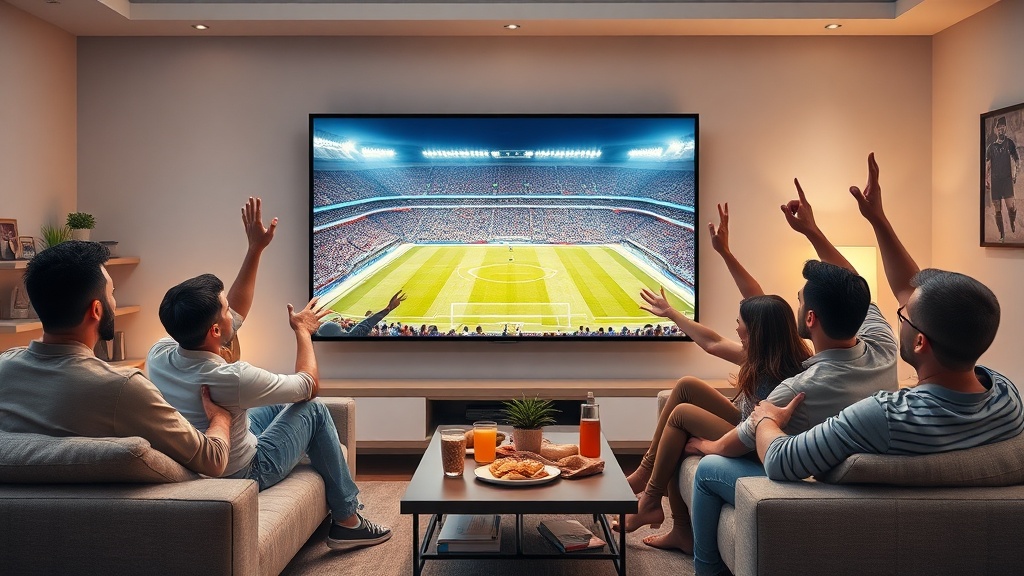

IPTV TV has revolutionized the way we consume media, offering unparalleled flexibility and a vast array of content directly to our screens. In 2026, the landscape of IPTV TV continues to evolve at a rapid pace, bringing even more advanced features, higher quality streams, and a personalized viewing experience. This comprehensive guide will delve into everything you need to know about IPTV TV, from its foundational concepts to the cutting-edge trends shaping its future. Whether you’re a seasoned enthusiast or new to the world of internet protocol television, understanding its nuances is key to unlocking its full potential.
Table of ContentsUnderstanding the Core of IPTV TV TechnologyChoosing the Best IPTV TV Service in 2026Enhancing Your Experience with IPTV TV FeaturesThe Future of IPTV TV: Trends and InnovationsCommon Challenges and Solutions with IPTV TVSetting Up Your IPTV TV System for Optimal PerformanceFAQ About IPTV TVRelated IPTV Services
Understanding the Core of IPTV TV Technology
At its heart, IPTV (Internet Protocol Television) delivers television content over Internet Protocol networks instead of traditional broadcast, cable, or satellite formats. This fundamentally changes how media is distributed and consumed. Instead of receiving scheduled broadcasts, users can often access content on demand, pause live TV, and choose from an extensive library of movies and shows. The underlying technology relies on high-speed internet connections to transmit data packets containing video and audio, which are then decoded and displayed on your device.
The transition from traditional television to IPTV TV is driven by several factors, including the increasing ubiquity of broadband internet and the desire for more control over viewing habits. This shift allows providers to offer a more interactive and personalized experience, moving beyond the limitations of linear programming. The quality of IPTV TV streams is also a significant advantage, with many services now offering high-definition (HD) and even ultra-high-definition (UHD) content, provided your internet connection can support it.
Key components of an IPTV TV system include the content source (broadcasters, studios), the head-end (where content is processed and encoded), the distribution network (internet service providers), and the end-user devices (set-top boxes, smart TVs, mobile devices). Each component plays a crucial role in ensuring a seamless and high-quality viewing experience. The efficiency of these components directly impacts the user’s satisfaction with their IPTV TV service.
The scalability of IPTV TV is another major benefit. Unlike traditional broadcasting, which can be limited by bandwidth and infrastructure, IPTV TV can scale to accommodate a large number of users and a vast amount of content without significant degradation in service quality. This makes it an ideal solution for a future where on-demand content and personalized viewing are paramount.
Choosing the Best IPTV TV Service in 2026
With a multitude of providers vying for your attention, selecting the best IPTV TV service in 2026 can seem daunting. Several factors come into play, including content variety, streaming quality, device compatibility, customer support, and, of course, pricing. It’s essential to evaluate your specific needs and preferences before committing to a subscription.
Content is king, and a good IPTV TV service will offer a diverse range of channels, including live TV, sports, movies, and international programming. Many providers also include extensive video-on-demand (VOD) libraries, giving you access to thousands of titles at your fingertips. Consider what genres and types of content are most important to you and check if the provider’s offerings align with your interests. You can explore the channels available on our platform to see our diverse selection.
Streaming quality is paramount for an enjoyable viewing experience. Look for providers that offer HD and UHD streams, and ensure they have robust servers to minimize buffering and latency. A reliable internet connection is also crucial for maintaining high-quality IPTV TV streams. Device compatibility is another key consideration; ensure the service works seamlessly with your preferred devices, whether that’s a smart TV, smartphone, tablet, or dedicated set-top box. Our services are compatible with a wide range of supported devices.
Customer support can make a significant difference, especially if you encounter technical issues. Opt for providers with responsive and knowledgeable support teams that can assist you promptly. Finally, pricing plans vary widely, so compare different packages and features to find one that offers the best value for your money. Some providers offer trial periods, which can be an excellent way to test the service before committing long-term.
User reviews and testimonials can also provide valuable insights into a provider’s reliability and overall service quality. Look for independent reviews and community forums to get an unbiased perspective. A well-researched decision will ensure you get the most out of your IPTV TV experience.
Enhancing Your Experience with IPTV TV Features

Modern IPTV TV services come packed with an array of features designed to enhance your viewing experience. Beyond just watching live television, these functionalities transform how you interact with content, making it more personal and convenient. Understanding these features can help you leverage your subscription to its fullest potential.
One of the most popular features is Video-on-Demand (VOD), which allows you to watch movies, TV shows, and documentaries whenever you want, without being tied to a broadcast schedule. This library is often updated regularly with new content, ensuring there’s always something fresh to watch. Another crucial feature is catch-up TV, which enables you to watch previously aired programs for a certain period after their original broadcast, perfect for those who miss their favorite shows.
Time-shifting capabilities, such as pausing, rewinding, and fast-forwarding live TV, give you unprecedented control over your viewing. This means you can take a break from a live broadcast without missing a moment. Many IPTV TV services also offer Electronic Program Guides (EPGs), which provide a detailed schedule of current and upcoming programs, making it easy to plan your viewing and discover new content.
Multi-screen support is increasingly common, allowing you to watch content on different devices simultaneously, often within the same household. This is ideal for families with diverse viewing preferences. Parental controls are also a vital feature, enabling parents to restrict access to certain content based on ratings or specific channels, ensuring a safe viewing environment for children. These advanced features truly set IPTV TV apart from traditional media consumption.
Moreover, some premium IPTV TV services integrate with other smart home devices and offer personalized recommendations based on your viewing history, further tailoring the experience to your tastes. The continuous innovation in features ensures that IPTV TV remains at the forefront of digital entertainment.
The Future of IPTV TV: Trends and Innovations
The world of IPTV TV is constantly evolving, with new technologies and trends shaping its future. As we look towards 2026 and beyond, several key innovations are set to redefine how we consume television and interact with digital content. Staying abreast of these developments will help users anticipate and embrace the next generation of entertainment.
One major trend is the integration of Artificial Intelligence (AI) and Machine Learning (ML). These technologies are being used to provide more personalized content recommendations, optimize streaming quality based on network conditions, and even enhance user interfaces for a more intuitive experience. AI-driven analytics can also help providers understand user behavior better, leading to more tailored content offerings and improved service delivery for IPTV TV.
The rise of 5G technology is another game-changer. With its ultra-low latency and high bandwidth, 5G will enable seamless, high-quality IPTV TV streaming on mobile devices, even in crowded areas. This will significantly enhance the mobile viewing experience, making it comparable to watching on a home TV. Edge computing will also play a role, bringing content closer to the end-user to reduce latency and improve load times.
Interactive and immersive experiences are also on the horizon. This includes the integration of virtual reality (VR) and augmented reality (AR) into IPTV TV, offering viewers new ways to engage with content, such as watching sports events from a player’s perspective or exploring virtual sets of their favorite shows. The potential for interactive advertising and personalized content within these environments is immense.
Further advancements in content delivery networks (CDNs) and video compression technologies will ensure even higher quality streams with less bandwidth, making 4K and 8K content more accessible to a broader audience. The continuous evolution of user interfaces and smart TV integration will also make accessing and navigating IPTV TV content more effortless and enjoyable than ever before. The future promises an even richer and more dynamic IPTV TV landscape.
Common Challenges and Solutions with IPTV TV
While IPTV TV offers numerous advantages, users may occasionally encounter challenges. Understanding these common issues and their solutions can help ensure a smooth and uninterrupted viewing experience. Proactive troubleshooting can often resolve problems quickly, minimizing downtime and frustration.
One of the most frequent issues is buffering or stuttering video. This is typically caused by a slow or unstable internet connection, insufficient bandwidth, or an overloaded Wi-Fi network. To mitigate this, ensure your internet plan meets the recommended speeds for streaming, and consider upgrading if necessary. Optimizing your Wi-Fi signal by moving your router or using a Wi-Fi extender can also help. Closing other bandwidth-intensive applications on your network can also improve performance for your IPTV TV.
Another common problem is poor video quality, such as pixelation or blurriness. This can be due to a low-resolution stream from the provider, or your device automatically adjusting the quality based on your internet speed. Check your IPTV TV service settings to ensure you’re receiving the highest available resolution. Sometimes, a simple restart of your streaming device or router can resolve temporary quality issues.
Device compatibility issues can also arise, where the IPTV TV service doesn’t work correctly on a particular device. Always check the provider’s list of supported devices before subscribing. If you’re experiencing issues, ensure your device’s software is up to date, and try reinstalling the IPTV TV application. Our device compatibility page offers detailed information.
Login problems or service outages, while less frequent, can also occur. For login issues, double-check your credentials and ensure your subscription is active. If the service is experiencing an outage, check the provider’s social media or status page for updates. Reaching out to customer support is always an option if you can’t resolve the issue yourself. A reliable IPTV TV provider will have a robust support system in place.
Security concerns, such as unauthorized access or malware, are also important to address. Always use a reputable IPTV TV provider and ensure your devices are protected with up-to-date antivirus software. Using strong, unique passwords for your accounts is also crucial for maintaining security. By being aware of these potential challenges and their solutions, you can enjoy a more reliable and secure IPTV TV experience.
Setting Up Your IPTV TV System for Optimal Performance
Setting up your IPTV TV system correctly is crucial for achieving optimal performance and enjoying a seamless viewing experience. From choosing the right hardware to configuring your network, a few key steps can make a significant difference. Proper setup ensures you get the most out of your subscription.
First, ensure you have a stable and fast internet connection. A minimum of 25 Mbps is generally recommended for smooth HD streaming, with higher speeds needed for 4K content or multiple simultaneous streams. Consider a wired Ethernet connection for your primary IPTV TV device if possible, as it provides greater stability and speed compared to Wi-Fi, which can be prone to interference.
Next, select the appropriate streaming device. While many smart TVs have built-in IPTV TV apps, a dedicated set-top box or streaming stick (like an Amazon Fire Stick, Apple TV, or Android Box) often offers better performance, more features, and a wider range of app support. Ensure the device is compatible with your chosen IPTV TV service. You can find a list of compatible devices on our website.
Once your device is connected, download and install the IPTV TV application or configure your M3U playlist. Most reputable services provide clear instructions for this process. Take the time to explore the app’s settings, adjusting video quality, audio preferences, and parental controls to suit your needs. Familiarize yourself with the Electronic Program Guide (EPG) to navigate channels and content effortlessly.
Consider optimizing your home network. If you’re using Wi-Fi, ensure your router is centrally located and free from obstructions. Using a dual-band router (2.4 GHz and 5 GHz) can help reduce interference, especially if you have many devices connected to your network. Regularly updating your router’s firmware can also improve performance and security. A well-configured network is the backbone of an excellent IPTV TV experience.
Finally, perform regular maintenance, such as clearing cache on your streaming device and restarting your router periodically. These simple steps can prevent performance degradation over time and ensure your IPTV TV system continues to run smoothly. By investing a little time in proper setup and maintenance, you can significantly enhance your enjoyment of IPTV TV.
FAQ About IPTV TV
What is IPTV TV and how does it work?
IPTV TV delivers television content over Internet Protocol (IP) networks. Instead of traditional broadcast or cable signals, video and audio are sent as data packets over the internet. This allows for on-demand content, time-shifting, and a wider range of channels, all managed by your IPTV TV provider.
What are the minimum internet speed requirements for IPTV TV?
For standard definition (SD) content, a minimum of 5-10 Mbps is usually sufficient. For high-definition (HD) streams, 25 Mbps or more is recommended, and for 4K content, you’ll need at least 50 Mbps, ideally higher, to ensure a smooth and buffer-free IPTV TV experience.
Can I watch IPTV TV on any device?
Most IPTV TV services are compatible with a wide range of devices, including smart TVs, smartphones (Android and iOS), tablets, computers, and dedicated streaming boxes like Amazon Fire Stick, Apple TV, and Android TV boxes. Always check with your provider for specific device compatibility. Our supported devices page provides more details.
Is IPTV TV legal and safe to use?
The legality of IPTV TV depends on the source of the content. Legitimate IPTV TV services license their content from broadcasters and studios, making them legal. However, some services illegally stream copyrighted content, which is unlawful. Always choose reputable providers to ensure you are using a legal and safe IPTV TV service. Using a VPN can also add a layer of security and privacy.
How do I choose the best IPTV TV provider?
Consider factors such as content variety, streaming quality (HD/4K), device compatibility, customer support, and pricing. Look for providers with a good reputation and positive user reviews. Many providers offer trial periods, allowing you to test the service before committing. You can review our pricing options and available channels to see if our service meets your needs.
Related IPTV Services
You may also visit the following websites for similar services: